
Introduction
Benefits of Dental Implants have become one of the most searched topics among people looking for a permanent solution to missing teeth. Losing one or more teeth can affect not only your smile but also your ability to eat, speak, and maintain good oral health. While traditional dentures have been used for decades to replace missing teeth, modern dental implants have transformed restorative dentistry by offering a more natural, durable, and comfortable solution.
Many patients wonder whether they should choose dentures or dental implants. Although dentures may initially seem like the more affordable option, they often require adjustments, replacements, and additional maintenance over time. Dental implants, on the other hand, are designed to function like natural tooth roots, providing exceptional stability and preserving the jawbone.
Understanding the Benefits of Dental Implants can help you make an informed decision about your oral health. In this comprehensive guide, we’ll compare dental implants and dentures, explain their differences, and explore why dental implants are considered the gold standard for tooth replacement by many dental professionals.
Understanding Dental Implants and Dentures
Before comparing the two options, it’s important to understand how they work.
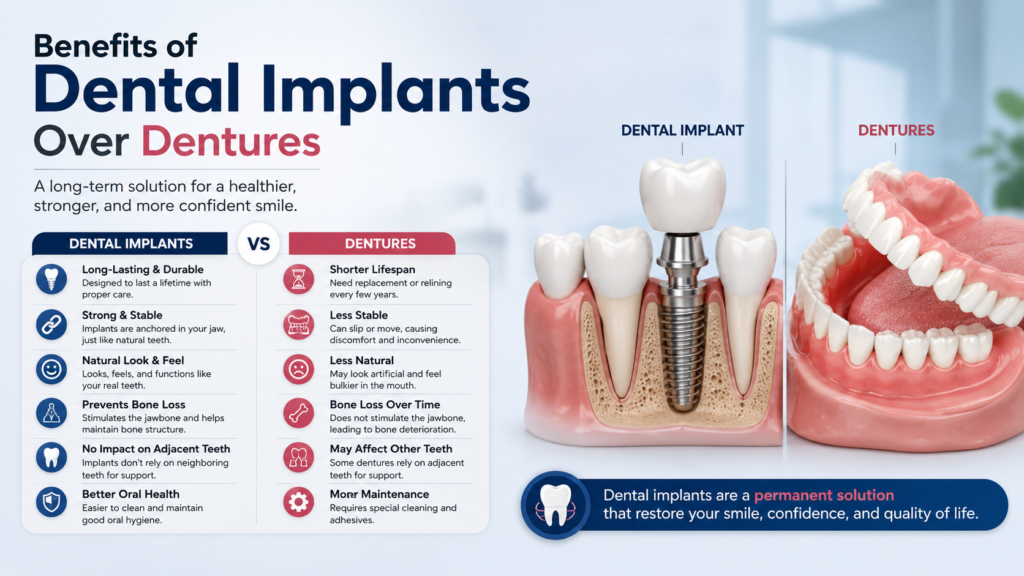
A dental implant is a small titanium post that is surgically placed into the jawbone. Over several months, the implant naturally fuses with the bone through a process called osseointegration. Once healed, a custom-made dental crown is attached to the implant, creating a tooth that looks, feels, and functions like a natural one.
Dentures are removable prosthetic devices designed to replace missing teeth. They may be complete dentures for patients who have lost all their teeth or partial dentures for those missing only a few teeth. Although dentures restore appearance and basic chewing ability, they rest on the gums instead of being anchored to the jawbone.
One of the biggest Benefits of Dental Implants is that they become a permanent part of your mouth, unlike removable dentures that require daily removal and cleaning.
1. Superior Stability and Comfort
One of the most significant advantages of dental implants is their outstanding stability. Since implants are securely anchored into the jawbone, they remain firmly in place during eating, speaking, laughing, and smiling.
Many denture wearers experience slipping, clicking sounds, or movement while talking or chewing. These issues can create embarrassment and reduce confidence in social situations.
Dental implants eliminate these concerns because they function just like natural teeth. There is no need for denture adhesives or constant adjustments.
This is one of the primary Benefits of Dental Implants that allows patients to enjoy everyday activities without worrying about their replacement teeth moving unexpectedly.
2. Better Chewing Efficiency
Eating comfortably is essential for maintaining good nutrition and overall health.
Traditional dentures often reduce chewing strength, making it difficult to eat hard foods such as apples, nuts, steak, or raw vegetables. Many denture users avoid certain foods because they fear discomfort or denture movement.
Dental implants restore nearly the same biting force as natural teeth. Because they are firmly attached to the jawbone, patients can comfortably enjoy a wider variety of foods without restrictions.
Another important aspect of the Benefits of Dental Implants is the ability to maintain a healthy and balanced diet without compromising food choices.
3. Prevents Jawbone Loss
One major disadvantage of dentures is that they do not stimulate the jawbone. After a tooth is lost, the surrounding bone begins to shrink because it no longer receives stimulation from the tooth root.
Over time, bone loss can change facial appearance, causing the cheeks to appear sunken and making individuals look older than they actually are.
Dental implants act like natural tooth roots by stimulating the jawbone whenever you chew. This stimulation helps maintain bone density and preserves facial structure.
Among the long-term Benefits of Dental Implants, preserving jawbone health is considered one of the most valuable because it protects both oral function and facial aesthetics.
4. Natural Appearance
Modern dental implants are custom-designed to match the color, size, and shape of your surrounding teeth.
The crown attached to the implant blends seamlessly with your natural smile, making it almost impossible for others to notice the replacement tooth.
Dentures, although aesthetically improved over the years, may sometimes appear artificial or become loose as the jawbone changes.
One of the cosmetic Benefits of Dental Implants is achieving a smile that looks and feels completely natural while maintaining facial harmony.
5. Long-Term Durability
Dental implants are designed to last for many years. With proper oral hygiene and regular dental checkups, implants can remain functional for decades and, in many cases, even a lifetime.
Dentures generally require relining, repairs, or complete replacement every 5 to 10 years because of wear and changes in jaw shape.
Although dental implants require a higher initial investment, their longevity often makes them a more cost-effective solution over time.
These long-lasting results are among the most appreciated Benefits of Dental Implants for patients seeking a permanent tooth replacement.
6. Improved Speech
Loose dentures may shift while speaking, making certain words difficult to pronounce clearly. Some denture wearers also experience clicking sounds during conversations.
Dental implants remain securely fixed, allowing patients to speak naturally without worrying about movement or pronunciation problems.
Clear communication improves confidence in professional meetings, social interactions, and everyday conversations.
This improvement in speech is another valuable example of the Benefits of Dental Implants.
7. Easier Oral Hygiene
Maintaining oral hygiene is much simpler with dental implants.
You can brush and floss around implants almost exactly as you would with natural teeth. There is no need to remove them before sleeping or soak them overnight.
Dentures require daily removal, specialized cleaning solutions, and careful handling to prevent damage.
Simplified maintenance is one of the practical Benefits of Dental Implants that fits well into everyday routines.
8. Increased Self-Confidence
Missing teeth often affect a person’s confidence, causing hesitation when smiling, speaking, or meeting new people.
Because dental implants closely resemble natural teeth, many patients regain confidence after treatment. They no longer worry about dentures slipping or falling out in public.
Feeling comfortable while smiling, laughing, eating, and speaking greatly improves overall quality of life.
These emotional improvements highlight another important aspect of the Benefits of Dental Implants beyond oral health alone.
Who Is a Good Candidate for Dental Implants?
Most healthy adults with one or more missing teeth may be suitable candidates for dental implants.
Ideal candidates generally have:
- Healthy gums
- Sufficient jawbone density
- Good overall oral health
- Commitment to maintaining oral hygiene
- No uncontrolled medical conditions that may affect healing
If bone loss has already occurred, your dentist may recommend bone grafting before implant placement.
Dental Implants vs Dentures: Quick Comparison
| Feature | Dental Implants | Dentures |
|---|---|---|
| Stability | Fixed securely | Can slip or move |
| Appearance | Very natural | Natural but removable |
| Chewing Ability | Nearly like natural teeth | Reduced chewing power |
| Bone Preservation | Prevents bone loss | Does not prevent bone loss |
| Lifespan | 20+ years or longer | Usually 5–10 years |
| Cleaning | Brush and floss normally | Remove for cleaning |
| Comfort | Feels like natural teeth | May cause irritation |
| Confidence | High confidence | May require adjustments |
Conclusion
Choosing between dentures and dental implants is an important decision that affects your oral health, comfort, and quality of life. While dentures remain a practical solution for some individuals, dental implants offer significant long-term advantages in stability, function, appearance, and durability.
The Benefits of Dental Implants go far beyond replacing missing teeth. They preserve jawbone health, improve chewing ability, restore natural speech, enhance confidence, and provide a permanent solution that can last for decades with proper care.
If you are considering tooth replacement, consult an experienced dentist to determine whether dental implants are the right option for your individual needs. Investing in your smile today can lead to better oral health, improved comfort, and lasting confidence for many years to come.